Dashboard
See it in action
Real-time agent control from your browser.
wactorz — Overview
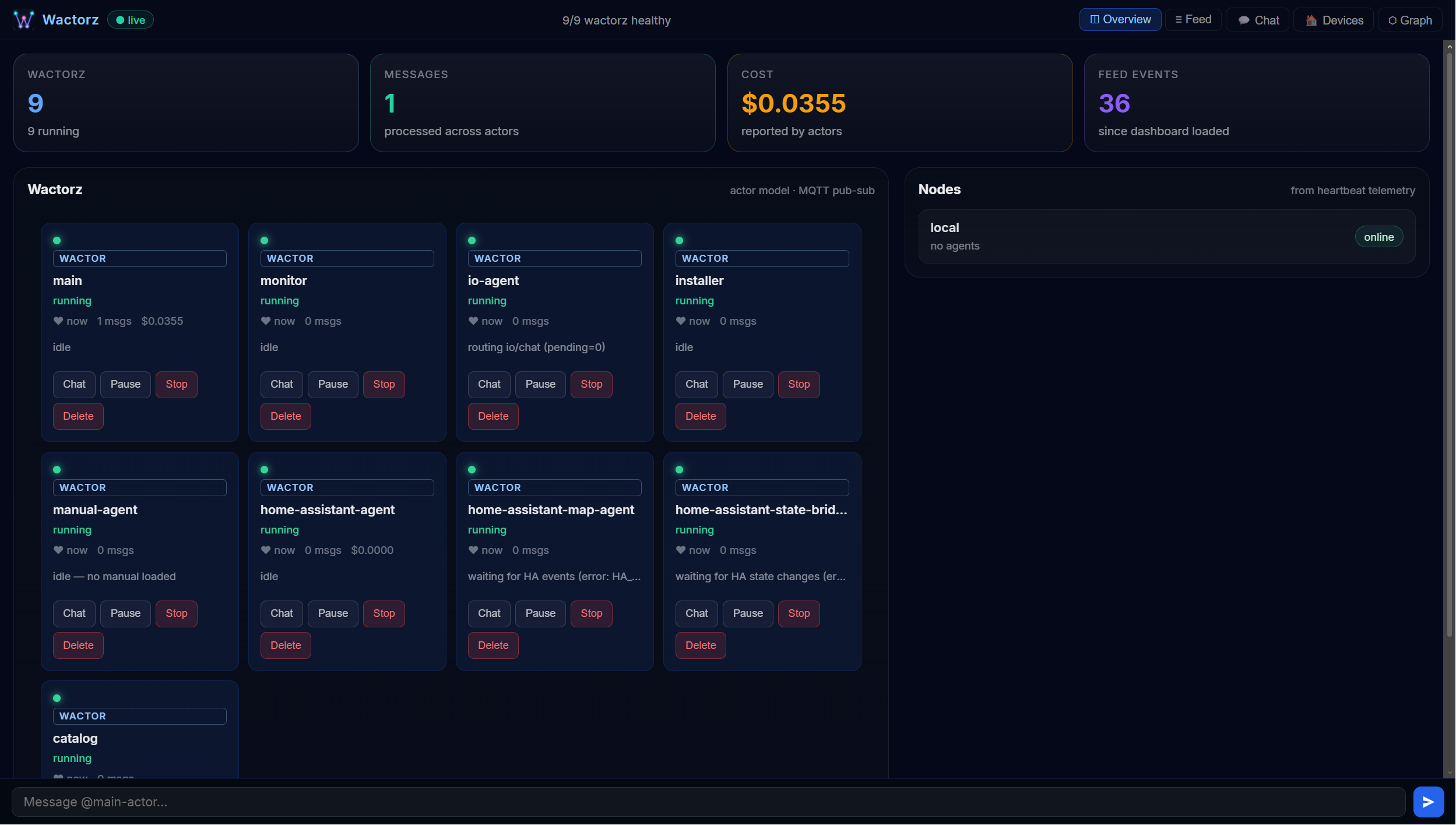
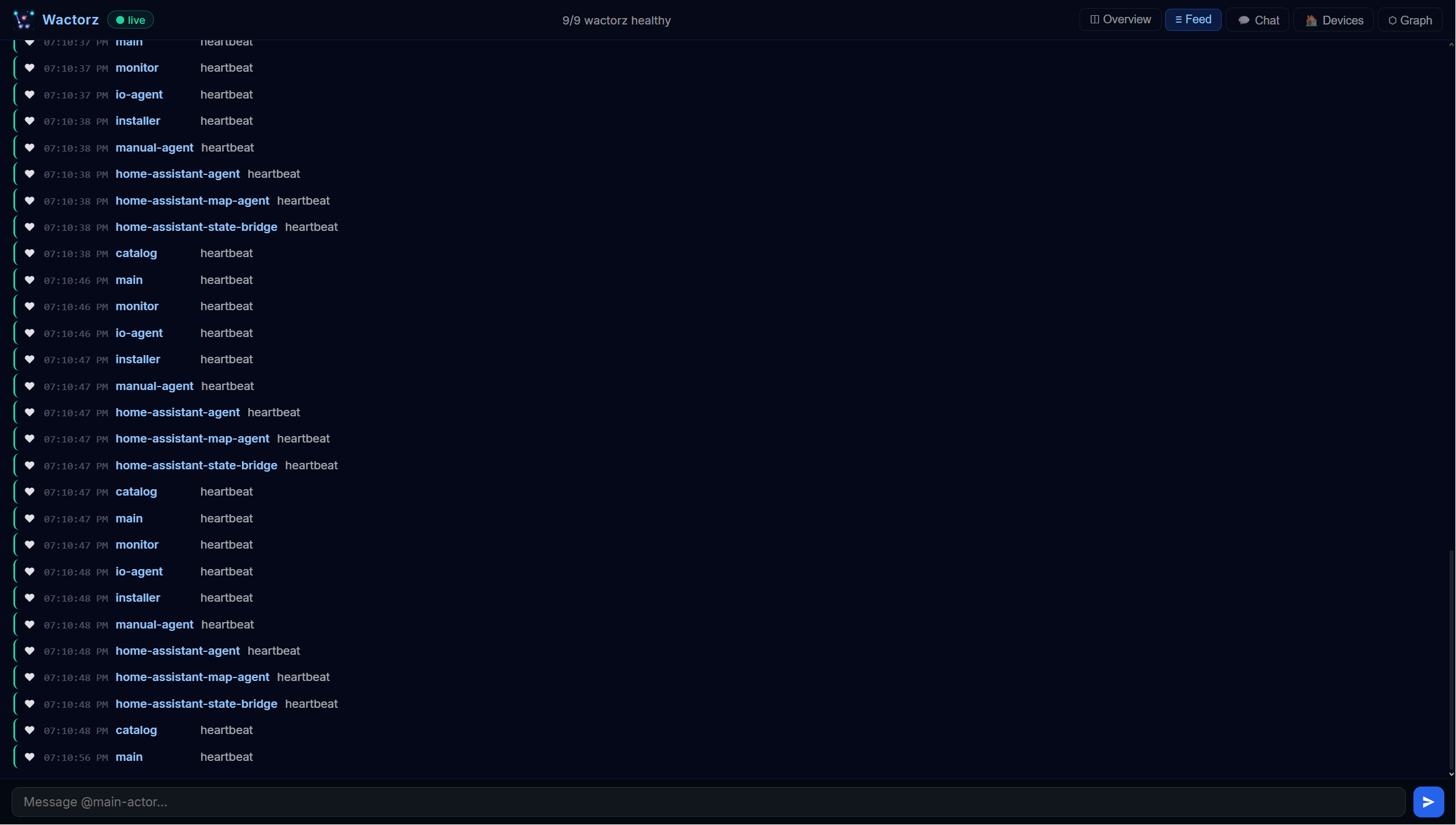
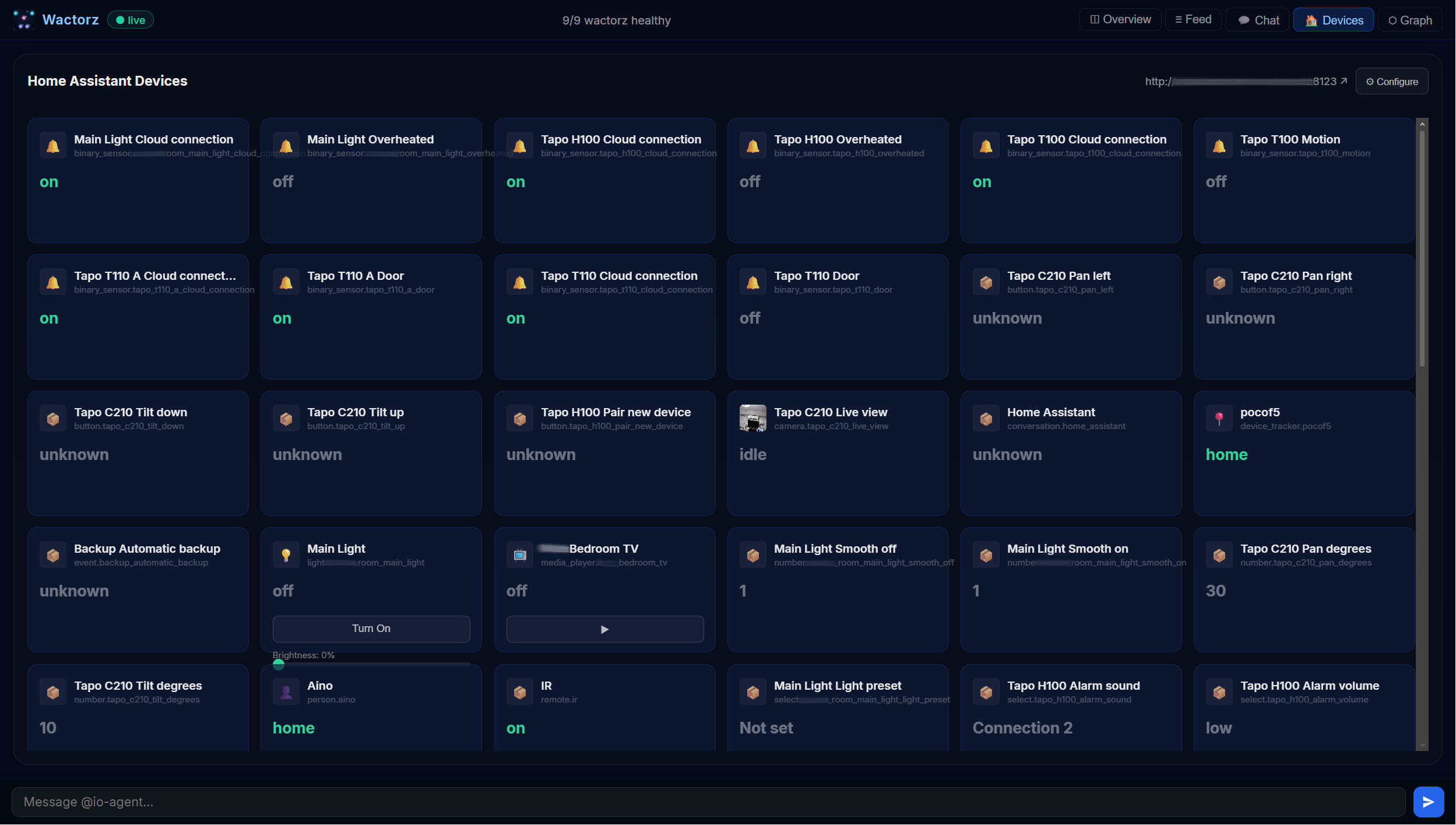
Async actor-model orchestration framework. Describe an agent in natural language — it spawns instantly over MQTT, persists across crashes, and scales from laptop to the edge.
How it works
Features
Actor-model concurrency · MQTT · Runtime spawning · Live dashboard
Each agent runs in its own async loop with an isolated mailbox. No shared state, no race conditions — crash one, the rest keep running.
One intent classification call — the right agent spawns on demand. No predefined types, no restarts, no downtime.
All inter-agent messaging flows through MQTT pub/sub — loose coupling, real-time telemetry, edge-native from day one.
MainActor, MonitorAgent, DynamicAgent, PlannerAgent, HomeAssistant agents, InstallerAgent, CatalogAgent — plus any you describe and spawn yourself.
State writes to disk on every persist call. Agents survive crashes and restore full context on restart — zero data loss.
Agent health, message flows, and cost meters updated in real time. Spawn, stop, and inspect any agent from the browser.
Docker, systemd, or native Python runner. InstallerAgent deploys remote nodes via SSH, bridging them into the central MQTT graph.
Create automations, list entities, issue commands, and build reactive "if X then Y" pipelines over MQTT — all in plain language.
Per-agent and aggregate cost tracking across all providers. See spend in real time before it becomes a surprise.
Dashboard
Real-time agent control from your browser.
Interfaces
One pipeline. Every interface. Zero code changes.
Get started
Install Wactorz, connect an MQTT broker, and start spawning agents in minutes.
 Wactorz
pip install wactorz[all]
or latest from GitHub:
pip install "wactorz[all] @ git+https://github.com/waldiez/wactorz.git"
If Wactorz is useful, a ⭐ on GitHub means a lot.